

As part of the global women’s agenda at the World Economic Forum (WEF) 2026 in Davos, Switzerland, the World Woman Foundation, in partnership with Forbes Middle East, hosted Sheikha Dr. Shamma bint Mohammed bin Khalid Al Nahyan, Chairperson of the Board of Directors of the Sheikh Mohammed bin Khalid Al Nahyan Cultural and Educational Institutions. The session was part of the World Woman Davos Agenda 2026, held alongside the Forum.

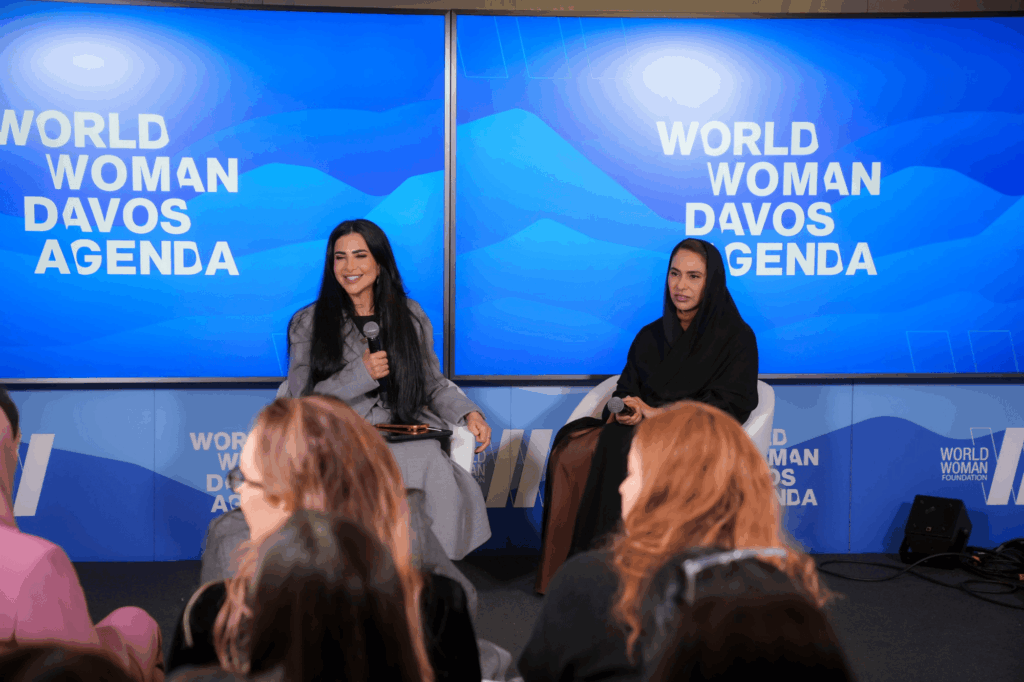
Sheikha Dr. Shamma was welcomed by Khuloud Al Omian, CEO and Editor-in-Chief of Forbes Middle East, and the discussion was moderated by media personality Hind Khlaifat. The dialogue focused on the evolving leadership roles of women and their impact on economic, cultural, and decision-making processes in a rapidly changing global landscape.
The session recognized Sheikha Dr. Shamma’s distinguished leadership at the intersection of culture, education, and global responsibility, highlighting her pivotal voice on international platforms. At the World Woman House, global leaders convened to foster connections, build sustainable partnerships, and open new horizons for human potential and shared prosperity.
During her address, Sheikha Dr. Shamma emphasized that the UAE’s approach to supporting women is rooted in long-term, visionary leadership rather than slogans or ad hoc initiatives. This vision, championed by H.H. Sheikha Fatima bint Mubarak (Mother of the Nation) through the establishment of the General Women’s Union, laid the foundation for the Emirati woman’s journey.
Sheikha Dr. Shamma explained that this vision has evolved into concrete policies, legislation, and institutional practices that ensure Emirati women hold active roles in economic and cultural decision-making. She noted that Emirati women have transitioned from a stage of “empowerment” to one of “consolidation,” reflecting their full integration into the nation’s leadership fabric.
Highlighting their economic impact, Sheikha Dr. Shamma revealed that Emirati female entrepreneurs manage an estimated $17 billion portfolio, demonstrating not only significant financial contribution but also institutional trust in women’s capacity to generate value, manage risks, and strengthen the UAE’s economic resilience in the post-oil era.