At the gateway to Burj Khalifa and Dubai Mall, one of the city’s busiest metro stations is being expanded to meet soaring passenger demand during peak seasons and landmark celebrations
Dubai’s most iconic metro station is set for a major transformation. In response to sustained growth in passenger numbers—particularly during New Year’s Eve celebrations, national and religious holidays, and major citywide events—the Roads and Transport Authority (RTA) has signed a landmark agreement with Emaar Properties to expand the Burj Khalifa/Dubai Mall Metro Station.
The expansion will increase the station’s total area from 6,700 square metres to 8,500 square metres, significantly enhancing its ability to serve one of the busiest urban districts in the region. Improvements will include upgraded station entrances, widened pedestrian bridges, expanded concourse and platform areas, and the addition of new escalators and lifts to ensure smoother passenger movement.
Operational efficiency is also a central focus of the project. Entry and exit gates will be separated to improve crowd flow, the number of fare gates will be increased, and commercial areas within the station will be expanded to support revenue generation. The project further includes landscaping works and improved integration with public transport services and other mobility modes, reinforcing seamless connectivity at ground level.
Once completed, the station’s passenger handling capacity will rise from 7,250 passengers per hour to 12,320 passengers per hour—an increase of 65 per cent. Daily capacity will reach up to 220,000 passengers, positioning the station to comfortably manage peak demand for decades to come.
A Strategic Public–Private Partnership
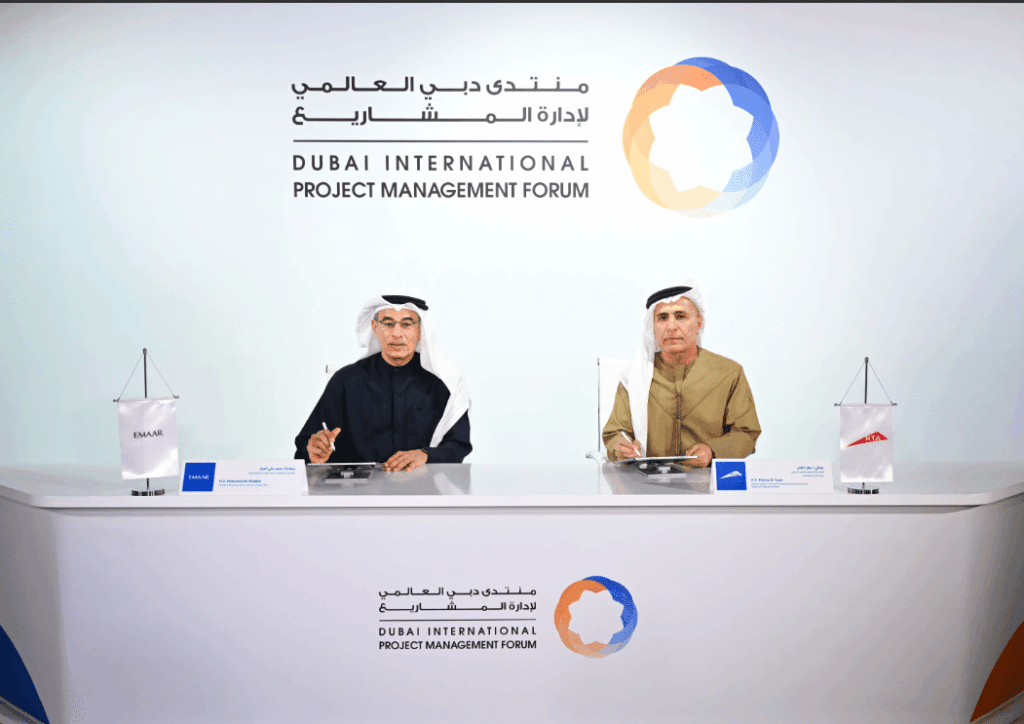
The agreement was signed by His Excellency Mattar Al Tayer, Director General and Chairman of the Board of Executive Directors of the RTA, and His Excellency Mohamed Alabbar, Founder of Emaar and Noon, and Chairman of Eagle Hills. The signing took place on the sidelines of the Dubai World Project Management Forum, attended by senior officials from both organisations.
Speaking at the event, Al Tayer described the partnership as a clear reflection of the vision of His Highness Sheikh Mohammed bin Rashid Al Maktoum, Vice President and Prime Minister of the UAE and Ruler of Dubai, to deepen collaboration between the public and private sectors.
“This approach supports the development of world-class infrastructure aligned with Dubai’s accelerated growth,” he said. “It enhances the city’s readiness to host major global events and reinforces Dubai’s position as a leading global city in sustainable urban mobility and quality of life.”
He noted that the expansion represents a strategic investment at the heart of Dubai’s urban core—an area where tourism, commerce and economic activity are most concentrated. “It underscores RTA’s commitment to proactive infrastructure planning that keeps pace with rapid population growth and rising visitor numbers, while ensuring smoother mobility during peak periods and major occasions,” he added.