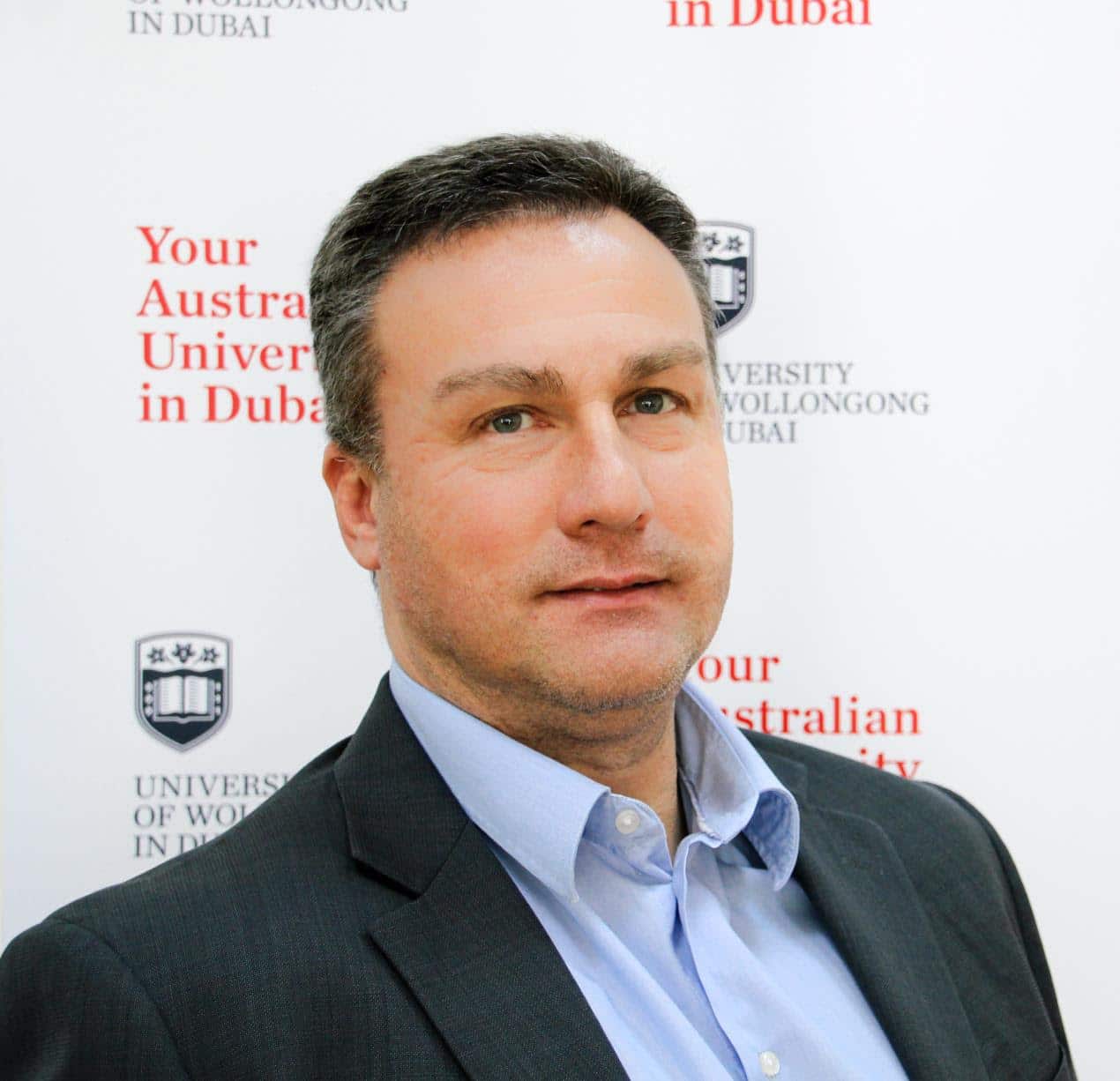
 Andy Philips, Chief Operating Officer at University of Wollongong in Dubai, on how COVID-19 will change the education model forever
In February this year, as a result of imposed international travel restrictions, more than 100,000 Chinese students were unable to commence their university studies in Australia. This has potentially taken away over $8bn from the Australian economy and took place even before this crisis unfolded in other parts of the world. The United States of America (USA) and United Kingdom (UK) were next, where in the USA, international students add as much as $45bn a year to the American economy and in the UK, universities receive almost $8.6bn in fees from overseas students.
One thing COVID-19 has certainly taught us is that all businesses must adapt to unprecedented rapid changes, or risk becoming obsolete. Businesses today need to ensure the resilience of their products and services to meet the evolving demands of a post-pandemic world.
Educational institutions globally are among those most adversely affected by the health crisis. Schools and universities have been forced to close for extended periods, and institutions have had to rework their existing business models to ensure they can remain operational in the aftermath of COVID-19.
The education sector is uniquely vulnerable to the pandemic. Traditional university models have always favoured in-class education. Students are the customers and the product is an education delivery system that allows them a better chance of attaining gainful employment after graduation. Massive, sprawling campuses have been the norm for hundreds of years. Until now. I believe this pandemic will transform how universities operate, as they are now struggling to maintain operations without access to their customers.
The largest and most reputed public universities in the world have traditionally benefitted from being operational for hundreds of years and receiving funding and land from government grants. They have never needed to adapt to exceptional circumstances, such as the one we are in now. This makes them unprepared to operate independently with sustainable business models and without access to government bailouts or funding.
In contrast, private universities often do not benefit from government bailouts or external funding, making them nimble and agile as well as resilient in adapting to unforeseen changes. Given the surge in internationalisation of higher education, with more than five million transnational students travelling abroad each year, it is important to ask, what exactly are these students looking for?
Are international students really seeking large campuses with sporting facilities and wide open spaces? And can a university continue to maintain and offer these facilities as part of a sustainable business model?
A market research study conducted by Dubai International Academic City (DIAC) and BMI, a global consultancy that connects international students with universities around the world, surveyed 2,700 transnational students from 50 countries, and found that the two most important characteristics students looked for in a university were quality of education and employment. Interestingly, the least important were sporting and community facilities!
These students were less interested in extracurricular services such as sports or community events, focusing instead on initiatives that increase their chances of securing employment.
As the higher education landscape evolves, so too must the offerings of universities. From the types of degrees offered, all the way to the types of facilities that students want. It is for this reason that blended learning will become very significant in the near future. Universities worldwide will be compelled to offer blended or distance learning as an educational delivery system. Educational institutions have used this as a viable teaching method for some time now, but never before has it been so crucial.
Blended learning offers the perfect solution to the challenges the pandemic has brought to the fore. Through combining online educational materials and opportunities for interaction with traditional classroom-based methods, students from around the world are now able to interact and also benefit from being inside the classroom or laboratory.
Universities must ensure they have the digital backbone and infrastructure to cater to the increased bandwidth needed to deliver such an offering successfully and sustainably. Universities must also make sure that as with traditional in-classroom learning, all assessments and exams delivered via blended learning follow a strict academic governance process.
From the point of view of financial viability, will these giant universities with large campuses continue to flourish in a post-COVID-19 world? And are modern day transnational students really looking for these facilities as part of their higher education? With the increased operating costs of these facilities, the ‘New York’ model of vertical campuses located within central business districts is proving to be more attractive to students who are keen to secure industry partnerships and ultimately gainful employment to achieve the highest return on investment for their university fees.
In many ways, COVID-19 is set to compel the legacy models of the education sector to adapt and evolve to offer more customer-oriented services. In the long run, this may also set the momentum for the transformation of curricula and methodologies as educational institutions catch up to the demands of the 21st century.